


A Conversation with Kristina Reed, a Board Member at Refugee Artisan Initiative.
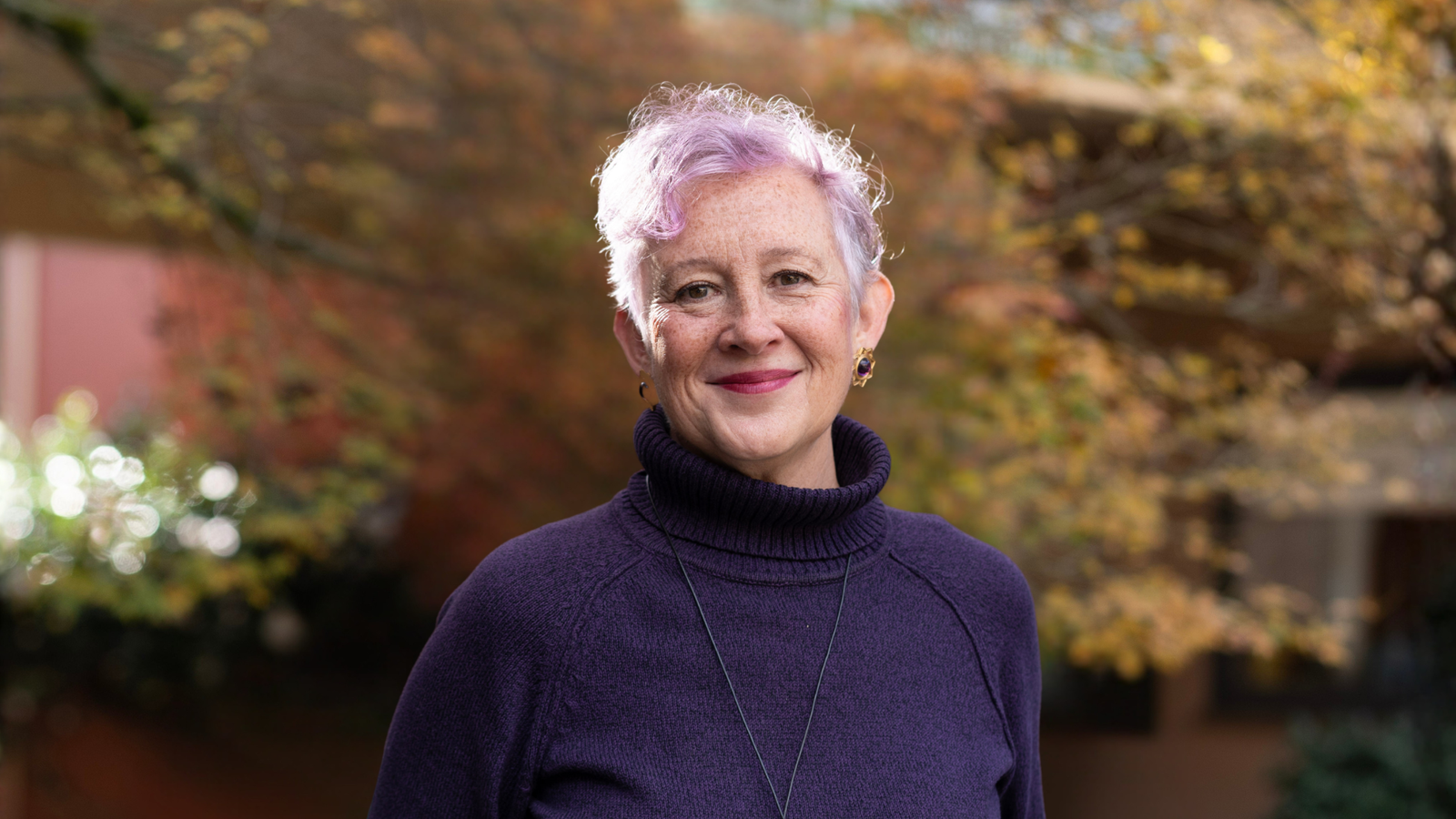
A champion for circular economy, textile re-use and resource protection, Kristina has been a part of RAI at every level. She’s led highly creative and technical teams to create ground-breaking entertainment for studios like Walt Disney Animation Studios, DreamWorks Animation and Madison Square Garden Sphere Studios. She is a two-time Academy Award winning producer for Best Animated Short Film for “Feast” (2014) and “Paperman” (2012.) As a daughter of two immigrants to the US, Kristina is passionate about helping the RAI community find their financial and social footing.
Your experience at RAI is unique because you served on the Board, then became a staff member and now are on the Board again. How did that come about?
My background is in large-scale creative production, and my passion is textile diversion, so RAI was at the perfect intersection. And I enjoyed seeing the organization from different points of view. I started as a volunteer and then was asked to join the Board. I could see places where the organization wasn’t moving forward because there wasn’t a lot there in terms of process. I was excited to manage production and help fix some of the systems—but to really do that I needed to be part of the staff.
What are some of the things you did to improve production at RAI?
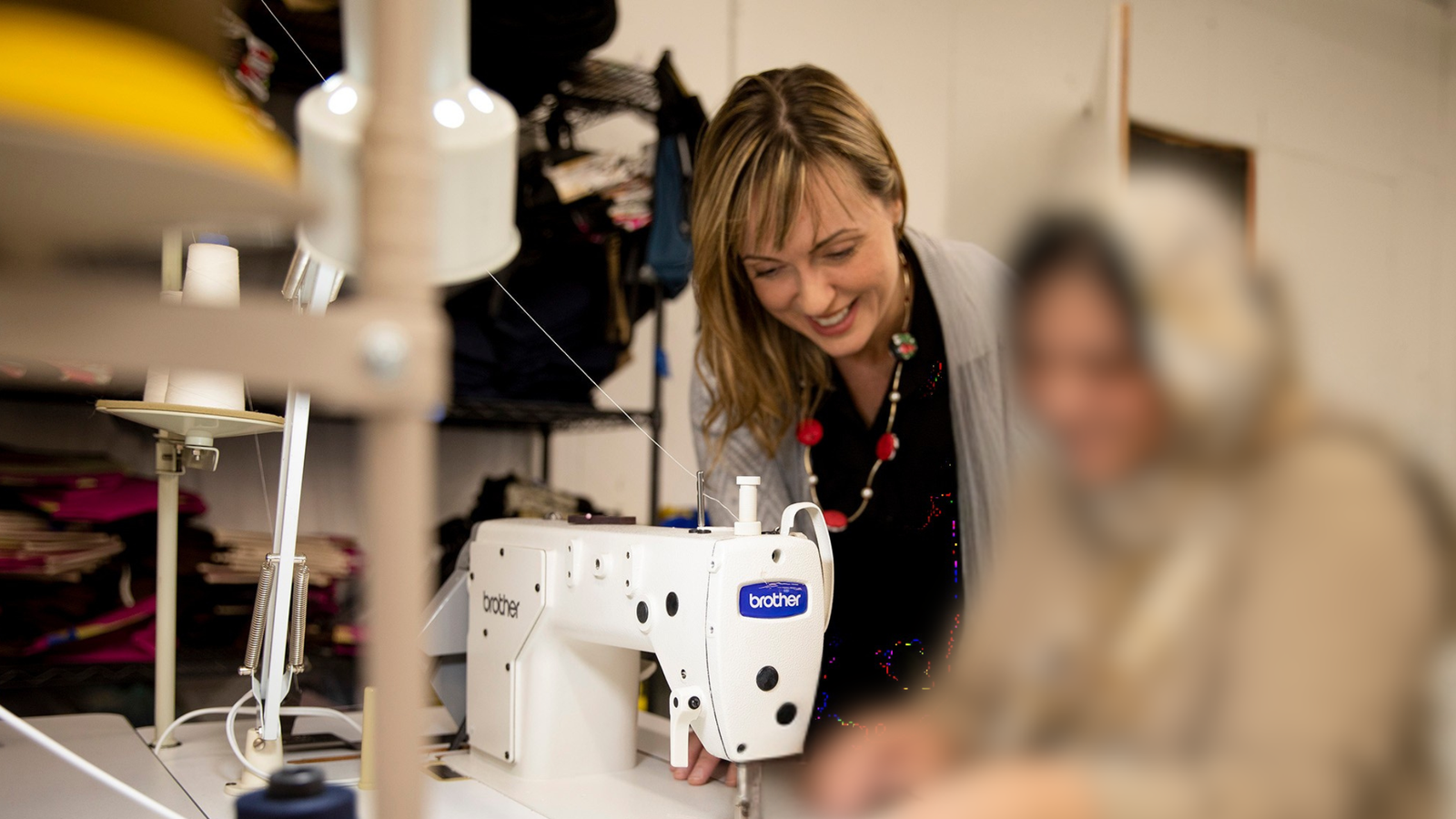
When I joined the staff, we were cutting everything by hand. Every piece, every pattern—even for large jobs like 1,000 tote bags. It was incredibly time consuming and physically demanding. By switching to a clicker, which is a machine that’s kind of like a cookie cutter for fabric, someone could do in a few hours what would have taken a couple of weeks to cut by hand. We also found a machine that could quickly cut straps to any length, so we taught everyone how to use that, which also was a big timesaver. It made us more efficient, it made us more competitive, it gave artisans the chance to learn valuable new skills. Before I came on board, no one really had the bandwidth to think about production in a more strategic and systematic way.
Can you tell us more about the shared lunches at RAI?
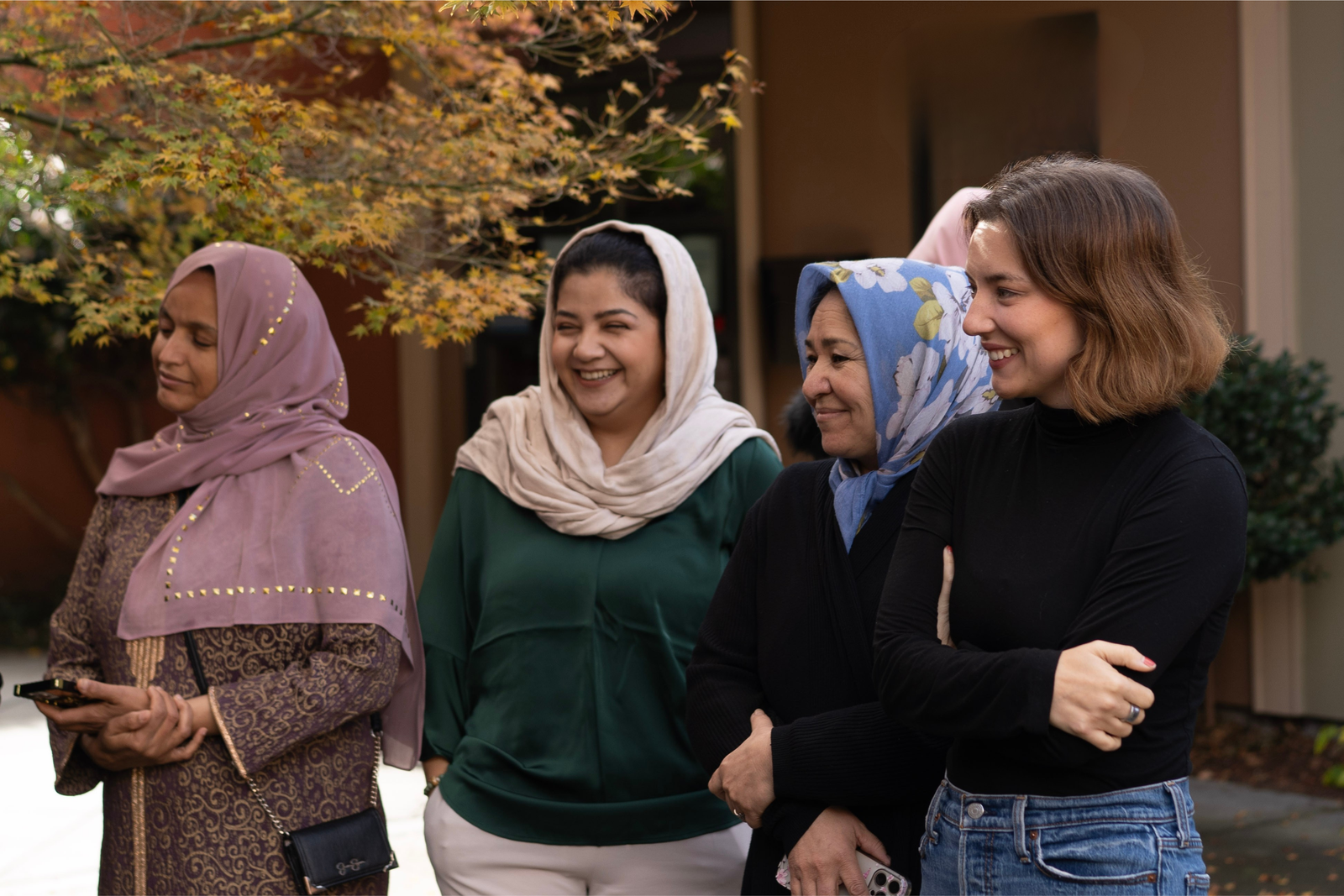
There has been a tradition for a long time that the women sit down and eat a potluck together every day. Everyone is welcome and there’s no pressure to join. But there’s something magic about it. Not everyone speaks the same language, but we all share stories about cooking, about spices and flavors and how different foods are prepared. And that leads to deeper conversations about families and cultures. Sitting around that table together is so powerful. There’s a feeling that we’re all in this together. It’s the emotional core of RAI and I absolutely loved it.
What do you think of the new space?
I just saw it for the first time recently and I was completely blown away! I spent a lot of time in the old basement: it was dark and creepy and no one really wanted to be down there. And now it’s so much bigger, better organized and more efficient. And absolutely beautiful. It’s like we’re not just moving into a new building; we’ve become a whole new organization. It’s like a rebirth.
What are your hopes for the future of RAI?
My hope is that we can continue to grow and improve. That we can be more efficient and competitive with our production. That we can find new pipelines and opportunities. That we can spread a wider net and help more women. It’s such an incredible organization and it feels like we’re going through some important changes right now. Like we’re transitioning from RAI 1.0 to RAI 2.0. Like we’re growing up.